Pilot 100: Accountability Begins with a Completed Handoff
How ALPRP’s proposed Pilot 100 tests completed referrals, staff workload and human oversight—and earns expansion through evidence.
ALPRP Journal
Alabama-specific reporting, policy analysis, reform design, and accountability—grounded in sources and focused on safer prisons and communities.

How ALPRP’s proposed Pilot 100 tests completed referrals, staff workload and human oversight—and earns expansion through evidence.
Why the Journal exists
Prison reform fails when advocacy outruns the evidence. The Journal documents what is known, what is alleged, what the state reports, and what ALPRP proposes to do differently.
Daniel Williams was weeks from release. His death—and the warning signs surrounding Lamont Wilson—show why custody requires more than confinement: it requires protection, intervention and accountability.
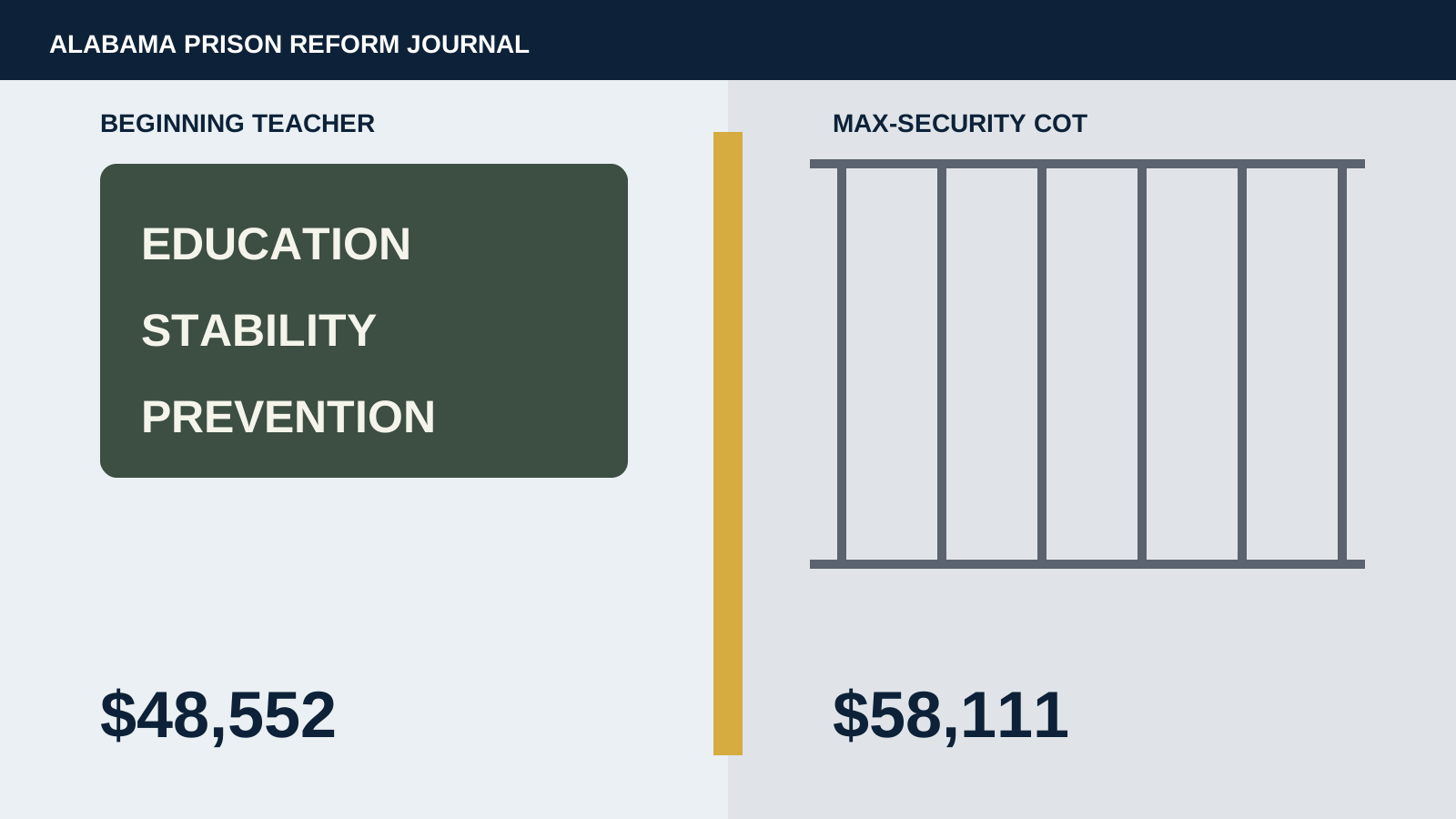
In FY2027, a beginning Alabama classroom teacher with a bachelor's degree earns a state minimum salary of $48,552, while a beginning ADOC Correctional Officer Trainee at a maximum-security prison earns $58,111. The comparison raises a broader question about where Alabama invests—and when.
Alabama spends millions on corrections, yet taxpayers remain in the dark. Modern data tools and transparent monitoring can turn our prisons into safer, more accountable environments.
Alabama faces a choice: rely solely on costly facility construction or embrace smarter policy. Tapping federal funding for reentry and mental health can increase prison safety and protect taxpayers.
Public safety doesn't end at the prison gate. When Alabama focuses on real accountability and education over warehousing, our neighborhoods become safer.
Ninety-five percent of people in Alabama prisons will eventually come home. When we equip them with real skills and accountability before release, we turn potential reoffenders into productive neighbors.
True public safety requires more than high correctional budgets. By modernizing Alabama's prison policy around accountability and earned reintegration, we can protect local neighborhoods and save taxpayer dollars.
Real prison reform isn't about soft sentences; it's about structured restoration. Discover how literacy and job training inside Alabama facilities build safer communities.
Every year, thousands of Alabamians leave prison and return to our communities. Without job skills and real support, recidivism stays high. Preparing people for release makes Alabama safer and stronger.
For too long, Alabama's state prisons have operated behind outdated record-keeping. Modern technology offers a clear path to protect officers, ensure safety, and deliver accountability.
True rehabilitation requires active preparation and skill-building. When Alabama prisons invest in meaningful education, individuals transform and our communities become safer.
Public safety doesn’t end at the prison perimeter. To keep Alabama safe, our correctional facilities must prioritize order, accountability, and real rehabilitation over chaotic warehousing.
Alabama's correctional system operates behind outdated paper records and hidden data. Practical digital tools can bring transparency, protect staff, and lower costs.
When policy focuses only on locking doors, we set our communities up for failure. True public safety requires lawmakers to demand accountability and structure inside our prisons.
When we treat our prisons as mere warehouses, we sacrifice public safety. Discover why structured, accountable facilities are essential for keeping Alabama communities safe.
Most people in Alabama prisons are coming home. Equipping them with real skills isn't soft on crime—it's the smartest way to lower costs and protect our communities.
When individuals leave Alabama prisons, they shouldn't just be handed a bus ticket. True public safety requires policies that mandate accountability, education, and earned reintegration.
Sending a person to prison shouldn't mean giving up on who they can become. When we prioritize strict accountability over idle warehousing, we rebuild families and make Alabama safer.
Over 95 percent of people in Alabama prisons will eventually come home. If we want safer communities, we must replace dead time with job skills and strict accountability.
Taxpayers spend hundreds of millions on Alabama's prisons, yet the system operates in the dark. By embracing modern technology and transparent data, we can build a safer, more accountable system.
When we just warehouse people, we rob them of the chance to make things right. True accountability requires the hard work of restoration, making Alabama safer for everyone.
When we just warehouse people, we make our streets more dangerous. By treating prisons as places of accountability and education, Alabama can lower crime and strengthen our communities.
We track everything in our modern world, yet Alabama's prisons operate in a data blackout. This isn't just inefficient; it's dangerous and costly. It's time for an upgrade.
People are released from Alabama's prisons every day. But is our state safer for it? Warehousing inmates without accountability or preparation is a recipe for recidivism and a threat to our communities.
We all want safer communities. But Alabama's current approach of warehousing people in chaotic prisons makes us less safe. True public safety begins with changing what happens inside.
A prison sentence shouldn't be a life sentence of broken family ties. When we sever connections, we risk public safety. Keeping families together is our most effective tool for successful reentry.
When someone leaves an Alabama prison, are they set up to succeed or fail? The answer determines the safety of our communities and the cost to taxpayers. It's time for a better plan.
Alabama's prisons are often a black box, costing taxpayers billions while failing to keep anyone safe. Simple, proven technologies can bring much-needed light and accountability.
National crime rates are dropping, but Alabama's prison crisis threatens to make our communities less safe. True public safety depends on fixing our broken system from the inside out.
Alabama spends over $500 million annually on its prison system — with poor outcomes and ongoing federal oversight. The ALPRP makes a fiscally conservative, data-driven case for comprehensive reform that legislators across the political spectrum can support.
Real-time data, digital learning platforms, AI-assisted case management, and public transparency dashboards could fundamentally change how Alabama manages its prison system — improving safety, outcomes, and accountability while reducing costs.
RAND Corporation research shows prison education programs reduce reincarceration rates by up to 43%. Alabama has some programming — but nowhere near enough. The ALPRP's education framework could change thousands of lives while saving taxpayers millions.
A source-based look at overcrowding, staffing measures and federal litigation, with clear distinctions between reported figures and allegations.
Restorative justice programs bring together victims, offenders, and communities to address the harm of crime in ways that the traditional criminal justice system cannot. Evidence shows these approaches improve victim satisfaction, reduce reoffending, and build community resilience.
More than 10,000 people are released from Alabama prisons each year. Without housing, employment, and support systems, many return within three years. The ALPRP's reentry framework addresses the barriers that lead back to incarceration.
Alabama's corrections officer vacancy rate exceeds 40% at many facilities. This crisis endangers staff and incarcerated people alike — and drives up overtime costs for taxpayers. The ALPRP offers a comprehensive workforce strategy to turn the tide.
An estimated 50-60% of Alabama's incarcerated population has a diagnosable mental health condition. Many more struggle with substance use disorders. Without treatment, these individuals cycle through the system repeatedly — at enormous human and financial cost.
Alabama's faith communities have long been engaged with prison ministry and reentry support. Now, a growing coalition of churches, mosques, and community organizations is advocating for systemic reform — and demonstrating what compassionate, effective support looks like on the ground.
When a parent goes to prison, the children pay a price too. An estimated 1 in 14 American children has had an incarcerated parent. In Alabama, maintaining family connections reduces recidivism, supports children's wellbeing, and keeps communities stronger.
Receive new ALPRP Journal analysis and accountability updates.